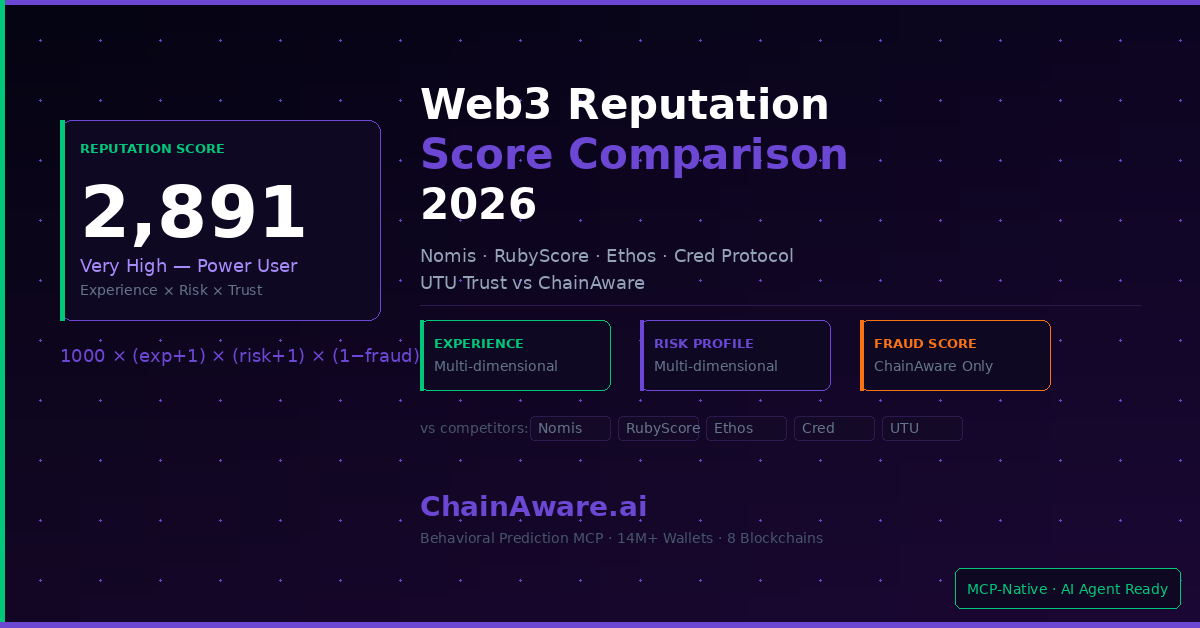
What wallet reputation scores measure
A wallet reputation score is a numerical value, typically ranging from 0 to 100, that quantifies the trustworthiness and risk profile of a blockchain address. Unlike a credit score, which relies on traditional financial history, a Wallet Reputation Score in DeFi Compliance and Privacy aggregates on-chain activity, security posture, and behavioral labels to create a single metric for risk assessment.
The calculation is rarely a simple average. Most scoring engines, such as those described by Coinspect and Formo, weigh specific factors differently based on their potential impact on security. For instance, a wallet that has never interacted with a known mixer might receive a higher security weight than one that has engaged with high-risk smart contracts, even if the latter has more transaction volume. The most critical checks—such as exposure to illicit addresses or lack of security hygiene—often carry the heaviest penalties, dragging the score down significantly.
In the context of regulatory compliance, this score serves as a triage tool. A score of 80 or higher is generally considered excellent, indicating a wallet with clean history and strong security practices. Conversely, a low score flags potential risks, such as ties to sanctioned entities or poor key management, allowing compliance teams to prioritize deeper investigations. It transforms raw blockchain data into an actionable insight for DeFi participants who must balance privacy with regulatory adherence.
How wallet reputation scores work
A Wallet Reputation Score is a numerical value, typically ranging from 0 to 100, that measures how engaged and valuable a blockchain wallet is. Unlike a credit score that relies on traditional banking history, a Wallet Reputation Score guide reveals how on-chain behavior translates into trust. The infrastructure behind these scores ingests raw transaction data and applies complex logic to determine risk and reliability.
The foundation of any reputation model is transaction history. Scoring engines analyze the volume, frequency, and counterparties of past transfers. A wallet that consistently interacts with established protocols and avoids mixing services or sanctioned addresses builds a positive baseline. This history serves as the primary signal for behavioral consistency, allowing compliance teams to distinguish between organic users and those attempting to obscure their financial footprint.
Beyond simple transfers, smart contract interactions provide deeper context. Every time a wallet swaps tokens, provides liquidity, or interacts with a decentralized application (dApp), it leaves a trace. Scoring algorithms weigh these interactions to assess sophistication and intent. For example, frequent interaction with audited, high-value protocols often correlates with higher trust, whereas repeated engagement with unverified or newly deployed contracts can trigger risk flags.
Entity labeling and security checklists further refine the score. By mapping wallet addresses to known entities—such as exchanges, venture capital firms, or known bad actors—scoring systems add a layer of identity resolution. Simultaneously, security checklists evaluate the wallet’s operational safety, flagging those that have previously suffered exploits or hold assets in vulnerable contracts. Together, these inputs create a dynamic profile that updates in real time, ensuring that reputation remains a current reflection of on-chain conduct.
How institutions use wallet reputation scores for compliance
For institutions and regulated DeFi protocols, a Wallet Reputation Scores guide is less about social standing and more about risk mitigation. These scores serve as a primary filter, allowing platforms to automate sanctions enforcement and manage regulatory exposure without manual intervention for every transaction.
Protocols integrate these scores to create friction for high-risk actors while streamlining access for verified users. A high score, often defined as 80 or above on a 0–100 scale, signals a history of reliable activity and low association with illicit behavior. Conversely, low scores trigger enhanced due diligence or outright bans, effectively quarantining wallets linked to mixers, darknet markets, or sanctioned entities.
This automated filtering is critical for legal compliance. By treating reputation as a quantifiable metric, platforms can demonstrate to regulators that they are actively monitoring for suspicious activity. The score acts as a real-time trust indicator, reducing the likelihood of accidental compliance breaches and protecting the protocol from regulatory penalties.
| Metric | High Reputation Score (80+) | Low Reputation Score (<50) |
|---|---|---|
| Access Level | Full access to high-yield pools | Restricted or banned access |
| Sanctions Check | Automatic clearance | Flagged for manual review |
| Transaction Limits | Standard or elevated limits | Strict caps or freezing |
| Regulatory Risk | Low association with illicit funds | High exposure to sanctioned addresses |
Privacy trade-offs in scoring
Wallet Reputation Scores works best as a clear sequence: define the constraint, compare the realistic options, test the tradeoff, and choose the path with the fewest hidden costs. That order keeps the advice usable instead of decorative. After each step, pause long enough to check whether the recommendation still fits the reader's actual situation. If it depends on perfect timing, unusual access, or a best-case budget, include a simpler fallback.
The simplest way to use this section is to write down the real constraint first, compare each option against it, and choose the path that still works outside ideal conditions.
Evaluating score providers
Choosing a wallet reputation score provider requires looking past the final number to understand the underlying mechanics. A score is only as reliable as the data it consumes. You need to verify whether a provider relies on on-chain transaction history, identity verification layers, or a mix of both. The best providers for DeFi compliance are transparent about their weighting algorithms, showing exactly which behaviors—such as interaction with sanctioned addresses or high-frequency trading—drives the rating.
Transparency is non-negotiable for legal teams. If a vendor cannot explain how they handle false positives or update their blacklist sources, the score is a black box. Look for providers that publish their methodology or offer API documentation that details the specific risk factors. For example, Coinspect’s Security Score ranges from 0 to 100 based on four distinct security checklists, with critical checks having the most impact on the final result. This level of granularity allows you to audit the score rather than just accepting it.
Integration capabilities often determine whether a score provider is viable for your infrastructure. The tool must fit into your existing KYC/AML workflows and offer low-latency API responses. Some platforms, like bitsCrunch, offer a network interface that evaluates trustworthiness based on comprehensive on-chain metrics, which can be more relevant for DeFi protocols than simple address screening. Ensure the provider supports the specific blockchain networks you operate on and offers webhook notifications for real-time risk updates.
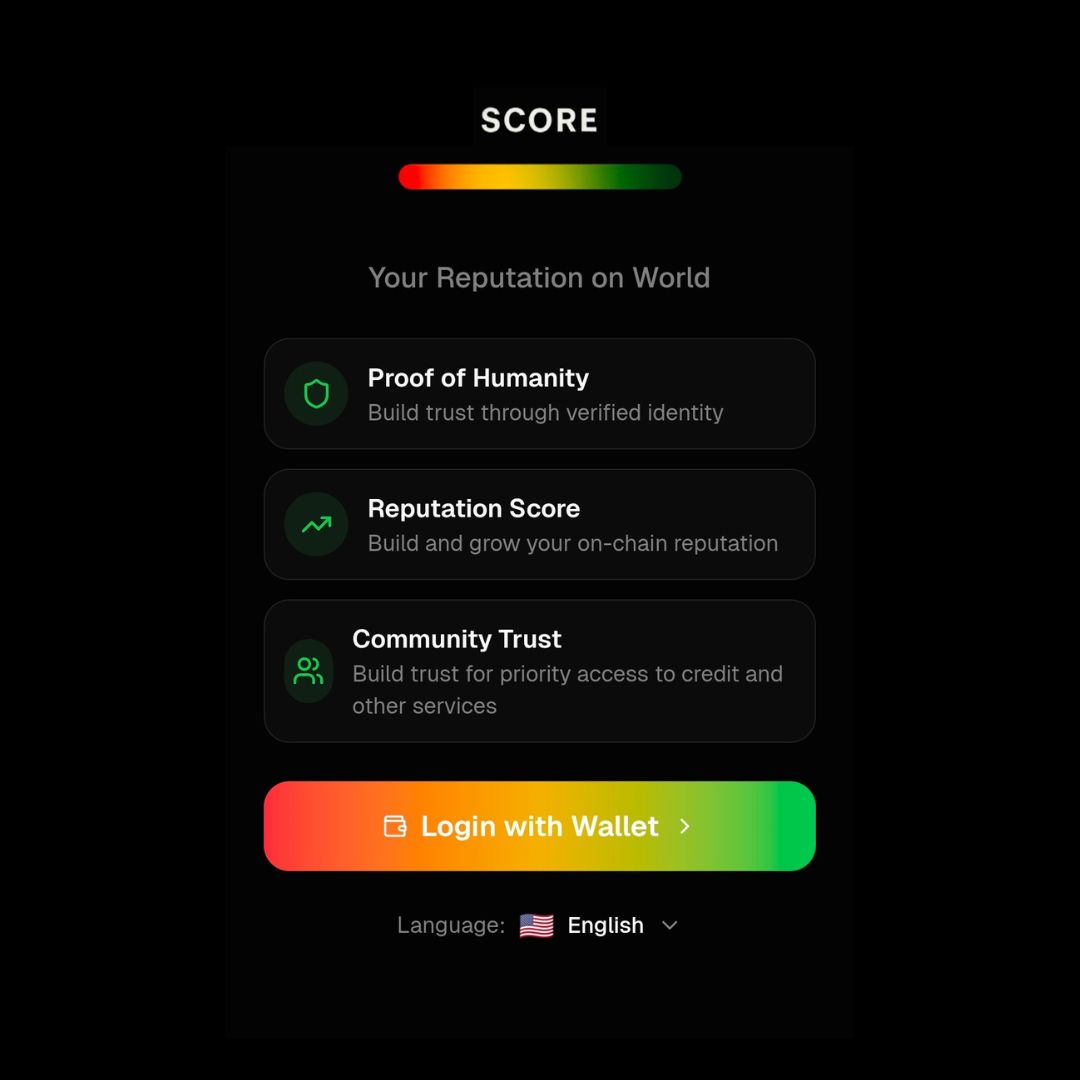
When comparing options, use this checklist to filter providers:
- Data Source Clarity: Does the provider explicitly list the data sources (e.g., chain data, off-chain KYC, threat intel feeds)?
- Algorithm Transparency: Is the weighting of different risk factors publicly documented or available via API?
- Integration Ease: Does the provider offer RESTful APIs, webhooks, or SDKs compatible with your tech stack?
- Update Frequency: How often is the reputation score refreshed? Real-time or near-real-time updates are critical for active wallets.
- Compliance Alignment: Does the scoring model align with current regulatory expectations, such as FATF Travel Rule guidelines?
What constitutes a good score
Determining what qualifies as a "good" Wallet Reputation Score depends on the specific scoring model you use. However, most industry-standard frameworks operate on a 0–100 scale where benchmarks are relatively consistent. According to general reputation scoring principles, a score of 80 or higher is typically considered excellent and indicates a low-risk profile for DeFi interactions.
Scores in the 60–79 range often suggest moderate risk, potentially triggering additional compliance checks or transaction limits. Scores below 60 usually flag significant red flags, such as links to sanctioned entities or high-risk mixing protocols. For a Wallet Reputation Scores guide focused on DeFi compliance, aiming for that 80+ threshold ensures smoother integration with regulated platforms and minimizes the chance of frozen assets or rejected transactions.
No comments yet. Be the first to share your thoughts!