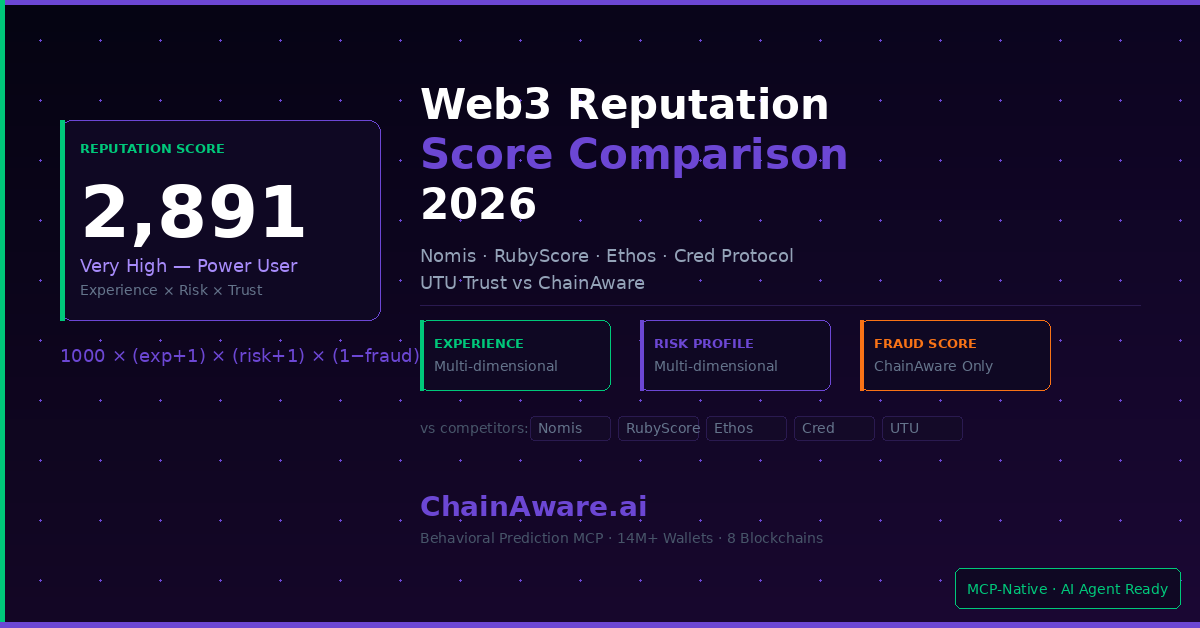
What wallet reputation scores measure
A wallet reputation score is a numerical indicator, typically ranging from 0 to 100, that evaluates a blockchain wallet’s trustworthiness and reliability. It is not a measure of your net worth or token balance. Instead, it functions as a digital fingerprint of your on-chain behavior.
These scores are derived from a complex mix of on-chain activity, historical behavioral patterns, and verified credentials. Think of it as a credit report for your wallet address. Just as a credit score reflects how responsibly you manage debt and payments, a wallet reputation score reflects how safely and consistently you interact with the blockchain.
The calculation looks at factors like transaction history, interaction with smart contracts, and adherence to security best practices. High scores indicate a wallet that is engaged, active, and generally considered low-risk by protocols and platforms. Low scores might flag wallets with histories of suspicious activity, frequent failures, or inactivity.
Understanding what these scores measure is critical for navigating Web3 identity. They help platforms segment users, manage risk, and offer tailored services. For a legal and regulatory perspective, these metrics provide a data-driven standard for assessing user quality beyond simple financial holdings.
To see how broader market sentiment influences the infrastructure supporting these scores, consider the current market conditions.
How wallet reputation scores are calculated
A wallet reputation score is a numerical value, typically ranging from 0 to 100, that measures how engaged and valuable a blockchain wallet is based on its on-chain activity, behavioral patterns, and verified credentials. Unlike traditional credit scores, these metrics are derived directly from public ledger data, creating a transparent but complex picture of digital trustworthiness.
The foundation of any scoring algorithm is transaction history. Systems analyze the frequency, volume, and consistency of transfers to determine baseline activity. However, raw volume alone is insufficient. Algorithms weigh counterparty risk heavily, flagging interactions with known mixers, sanctioned addresses, or high-risk smart contracts. This risk assessment is often refined using label data from blockchain analytics firms, which tag addresses with categories like "exchange," "defi protocol," or "malicious actor."
Beyond simple transfers, smart contract interactions provide deep behavioral insights. A wallet that frequently interacts with audited, high-liquidity protocols signals different risk profiles than one that engages with new, unaudited deployments. These patterns help distinguish between a cautious institutional player and a speculative trader. The technical architecture behind these scores relies on aggregating these disparate data points into a unified zScore or composite index, allowing platforms to make instant, data-driven decisions about user eligibility and risk exposure.
The relationship between wallet activity volume and reputation score stability is not always linear. High-volume wallets often exhibit greater score stability due to established history, while new or low-activity wallets may experience higher volatility in their reputation metrics as early patterns solidify.
Comparing leading reputation platforms
Choosing a wallet reputation score provider depends on whether you prioritize strict security hygiene or active user engagement. The three dominant players—Coinspect, Formo, and bitsCrunch—approach Web3 identity from different angles. Understanding their distinct methodologies helps you align the right tool with your specific compliance or segmentation needs.
Coinspect focuses heavily on risk mitigation. Their Security Score (0–100) is derived from four distinct checklists, prioritizing critical vulnerabilities over minor flags. This makes it a strong choice for institutions requiring a conservative, security-first view of wallet health. Formo, conversely, treats the wallet score as a data-driven standard for qualifying users. Their model emphasizes engagement and value, measuring how active and valuable a blockchain wallet is based on on-chain activity and behavioral patterns. bitsCrunch bridges these gaps by offering a broader on-chain metrics evaluation, focusing on the trustworthiness and reliability of wallets across various platforms.
The following comparison table highlights the core differences in score ranges, primary focus areas, and target use cases for each platform.
| Provider | Score Range | Primary Focus | Ideal Use Case |
|---|---|---|---|
| Coinspect | 0–100 | Security Hygiene | Institutional compliance & risk assessment |
| Formo | 0–100 | User Engagement | Market segmentation & onboarding |
| bitsCrunch | 0–100 | On-chain Reliability | Cross-platform trust evaluation |
Market context
While these platforms provide the infrastructure for identity, the underlying crypto market remains volatile. Monitoring major asset performance provides context for the data these reputation scores often analyze.
Compliance infrastructure and identity verification
Reputation scores are shifting from optional user badges to core infrastructure for KYC/AML compliance. Regulators and platforms are increasingly relying on these scores to perform risk-based access control and identity verification in Web3. By analyzing on-chain activity and behavioral patterns, a wallet score—typically a number from 0 to 100—provides a quantifiable measure of a wallet's engagement and value.
This data-driven standard allows platforms to segment users more accurately than traditional methods. Instead of a blanket ban on high-risk addresses, services can apply dynamic restrictions. A high score might unlock premium features or higher transaction limits, while a low score triggers additional verification steps. This approach balances security with user experience, ensuring that compliance is proportional to the actual risk posed by the wallet.
The integration of these scores into compliance workflows is becoming a primary concern for legal teams. As the industry matures, the ability to demonstrate a clear audit trail of risk assessment is crucial. Platforms that adopt these scores early are better positioned to navigate evolving regulatory landscapes.
| Feature | Traditional KYC | Score-Based Access |
|---|---|---|
| User Experience | High friction, static forms | Seamless, dynamic limits |
| Risk Assessment | Binary (pass/fail) | Continuous, granular |
| Audit Trail | Document-heavy | On-chain, automated |
| Adaptability | Low, requires manual review | High, real-time updates |
Privacy risks and score manipulation
Wallet reputation scores are powerful tools, but they come with significant privacy and integrity risks. These scores measure how engaged and valuable a blockchain wallet is based on onchain activity, behavioral patterns, and verified credentials. While useful for identifying reliable participants, the data collection process can erode user anonymity. Many scoring algorithms require deep onchain analysis, which can inadvertently link disparate wallet addresses to a single real-world identity. This transparency creates a double-edged sword: it builds trust in the ecosystem but exposes users to potential surveillance and targeted attacks.
Beyond privacy concerns, the integrity of these scores is vulnerable to manipulation. Bad actors can engage in "score farming"—creating numerous wallets to simulate legitimate activity and inflate their reputation scores. This practice undermines the reliability of the scoring system, making it difficult for platforms to distinguish between genuine users and synthetic entities. Without transparent and secure scoring mechanisms, the entire foundation of Web3 identity could be compromised, leading to a landscape where reputation is bought rather than earned.
To understand the market context for these identity infrastructure tools, it is helpful to look at the broader digital asset landscape. The volatility and growth of the Web3 sector directly influence the adoption and development of reputation scoring systems.
No comments yet. Be the first to share your thoughts!