The shift from pseudonymity to verified reputation
For years, the promise of blockchain was simple: you control your data, and your wallet address is just a string of characters. Pseudonymity meant you could transact without revealing your name. But as the market matures, that anonymity is becoming a liability rather than an asset. In 2026, compliance and trust are no longer optional extras; they are the baseline for participation.
Wallet reputation scores are the mechanism bridging this gap. Think of a wallet score like a credit score for the digital economy. Instead of looking at credit history, these systems analyze transaction patterns, links to known entities, and engagement metrics to assign a numerical value to trustworthiness. A score ranges from 0 to 100, where higher numbers signal lower risk and higher reliability.
This shift is critical for institutional adoption. Banks and regulated entities cannot interact with anonymous addresses that might be linked to illicit activity. By using wallet reputation scores analysis, platforms can quickly assess whether a counterparty is safe to engage with. It moves the industry from "trust no one" to "verify quickly."
A score of 80 or higher is generally considered excellent, indicating a clean transaction history and positive engagement. Lower scores flag potential risks, such as interactions with darknet markets or mixers. This data-driven standard allows projects to segment users and manage risk dynamically, turning opaque blockchain activity into actionable intelligence.
Core inputs for wallet reputation scoring
A wallet reputation score isn't a single static number; it is a composite metric built from multiple data streams. Think of it as a digital fingerprint that evolves with every interaction. For compliance professionals, understanding these inputs is essential because a score of 80 or higher on a 0–100 scale is typically considered excellent, while lower scores indicate higher risk exposure based on the entities connected to the wallet's transaction history [1].
The foundation of any reputation model is transaction history. Algorithms analyze the volume, frequency, and counterparties involved in past transfers. A wallet that consistently interacts with known, reputable entities will accumulate positive weight. Conversely, frequent interactions with mixers, sanctioned addresses, or high-risk exchanges can trigger immediate red flags. This historical data provides the baseline trust level for the address.
Beyond simple transfers, entity links play a critical role in determining reputation. If a wallet is associated with a verified business, a known exchange, or a reputable DeFi protocol, it may inherit some of that trust. However, if the same wallet is linked to darknet markets or ransomware collectives, the reputation score drops sharply. These links are often inferred through clustering algorithms that group addresses under a single owner or entity.
Activity patterns provide the final layer of context. Algorithms look for behavioral anomalies, such as sudden spikes in transaction volume or interactions with smart contracts that have not been audited. A wallet that behaves like a human trader over several months is viewed differently than one that exhibits bot-like behavior or participates in complex layering schemes. These patterns help distinguish between legitimate users and malicious actors.
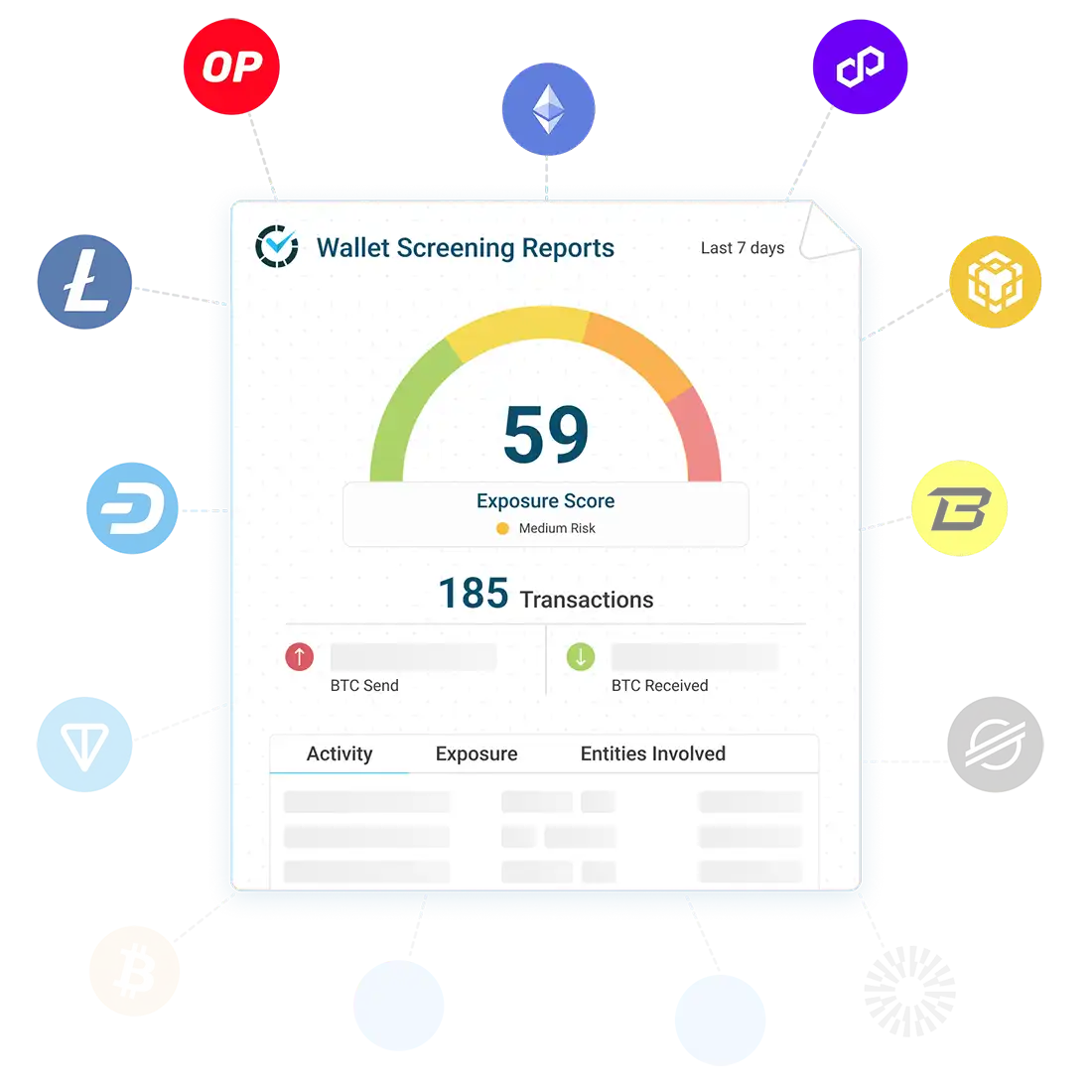
The most advanced systems also incorporate real-time scoring capabilities. This allows marketplaces to dynamically adjust access control and ranking mechanisms based on the latest on-chain activity [2]. For example, a wallet might have a good historical score but suddenly engage in a high-risk transaction, causing its reputation to drop instantly. This dynamic approach ensures that compliance measures remain effective against evolving threats.
In some specialized contexts, such as DeFi liquidity provision, additional behavioral scores are calculated. These might assess the strategic liquidity provided by a wallet or its engagement with specific governance mechanisms [3]. These nuanced inputs allow for a more granular understanding of a wallet's role within the ecosystem, moving beyond simple risk assessment to value assessment.
Understanding these core inputs helps compliance teams move beyond binary blacklists. By analyzing the full spectrum of transaction history, entity links, and activity patterns, organizations can make more informed decisions about risk management and user onboarding.
Privacy-preserving identity infrastructure
Traditional wallet reputation systems often operate like open books: to prove you are trustworthy, you must reveal your entire financial history. This binary approach forces a choice between transparency and privacy that rarely serves the user well. Zero-knowledge proofs (ZKPs) and selective disclosure change this dynamic by allowing you to prove specific facts about your wallet without exposing the underlying data.
Think of a zero-knowledge proof like a bouncer checking your ID at a club. The bouncer needs to know you are over 21, but they do not need to see your name, address, or birthdate. Similarly, with ZKPs, a wallet can cryptographically prove it meets certain reputation thresholds—such as having a clean history or sufficient age—without sharing the transaction hashes that led to that score.
This shift is critical for wallet reputation scores analysis because it decouples trust from visibility. Instead of handing over a raw ledger, users can generate a proof that verifies compliance with specific criteria. This allows marketplaces and protocols to assess risk dynamically while keeping sensitive transaction details private.
The result is a more nuanced reputation ecosystem. Users retain control over their data, and platforms can still make informed decisions about access control and risk management. This balance is becoming the standard for high-stakes Web3 interactions where privacy and compliance must coexist.

Comparing major reputation scoring frameworks
Not all wallet reputation scores measure the same thing. Some focus on trust and engagement, while others prioritize security hygiene or regulatory risk exposure. Understanding these differences is essential for compliance teams building a robust wallet reputation scores analysis strategy.
The market has settled on a few dominant methodologies, each with a distinct lens. Formo treats the score as a measure of long-term value and trustworthiness, blending on-chain activity with user engagement metrics. Coinspect takes a stricter, checklist-based approach, focusing heavily on technical security posture and vulnerability exposure. Vezgo, meanwhile, centers on risk mitigation, flagging transactions linked to illicit entities or high-risk patterns.
Here is how the leading frameworks compare across key criteria:
| Framework | Primary Focus | Score Range | Key Data Sources | Best For |
|---|---|---|---|---|
| Formo | Trust & Engagement | 0–100 | Transaction history, user activity, entity links | User segmentation and loyalty programs |
| Coinspect | Security Hygiene | 0–100 | Security checklists, vulnerability scans | Technical due diligence and security audits |
| Vezgo | Risk Exposure | 0–100 | Transaction patterns, known illicit addresses | AML compliance and fraud prevention |
How to integrate wallet reputation scores into compliance workflows
Adding reputation scores to your compliance stack isn’t just about adding another data point; it’s about changing how your platform interacts with risk. When done right, these scores act as a dynamic filter, allowing legitimate activity to flow while flagging suspicious behavior before it causes damage. The goal is to embed this analysis into the natural flow of user onboarding and transaction monitoring.
1. Define your risk thresholds
Before integrating any tool, you need to decide what constitutes a "bad" score. Most wallet analysis tools, like those from Scorechain, provide a risk score ranging from 1 to 100, where lower numbers indicate higher exposure to illicit entities. You must determine your platform’s tolerance. For example, a high-risk exchange might block any wallet scoring above 30, while a peer-to-peer marketplace might allow it with enhanced verification. This threshold becomes your first line of defense.
2. Choose a real-time scoring engine
Static checks are no longer enough. As noted in recent research on unified risk scoring frameworks, the industry is shifting toward real-time scoring that allows marketplaces to dynamically adjust access control and ranking mechanisms. You need a provider that can return these scores instantly during the transaction process. Delayed feedback means the risk has already been incurred. Look for APIs that offer sub-second latency to ensure the score is relevant to the specific transaction being processed.
3. Integrate into the user journey
The integration should be invisible to compliant users but obvious to risk managers. When a user initiates a transfer or onboarding step, the system should query the reputation score in the background. If the score is within your acceptable range, the process continues seamlessly. If it falls below your threshold, the system can trigger secondary checks, such as asking for proof of funds or delaying the transaction. This layered approach maintains user experience while enforcing security.
4. Establish a review and appeal process
Automated scoring is rarely perfect. False positives happen, and a user with a low score might have a legitimate explanation, such as receiving funds from a known but flagged exchange. Your compliance workflow must include a manual review queue for these edge cases. Allow your compliance team to override the automated decision after a brief investigation. This human-in-the-loop step is critical for maintaining user trust and ensuring you aren’t inadvertently blocking legitimate business.
5. Monitor and adjust thresholds regularly
The crypto landscape changes daily. New mixing services, sanctioned entities, and hacking groups emerge constantly. Your reputation score thresholds shouldn’t be set in stone. Regularly review your flagged transactions to see if your thresholds are too strict (causing false positives) or too loose (missing real risks). Adjusting these parameters based on recent data helps keep your compliance posture sharp and responsive to emerging threats.
Frequently asked questions about wallet reputation
What is a good reputation score? While every scoring system uses its own methodology, a score of 80 or higher on a 0–100 scale is typically considered excellent. In the context of wallet reputation analysis, hitting this threshold usually means your on-chain history is clean and free from associations with sanctioned entities or high-risk services. A score below 50 often flags a wallet for enhanced due diligence.
What is the wallet trust score? The wallet trust score is a specific metric used by compliance tools to measure the risk exposure of an address. Ranging from one to one hundred, a lower score indicates higher risk based on the entities connected to the wallet's transaction history. Unlike general reputation scores, this metric focuses heavily on forensic data, highlighting specific risk indicators like interaction with mixers or darknet markets.
How to calculate reputation score? Calculating a wallet reputation score involves analyzing the entire transaction history rather than just isolated events. Compliance platforms evaluate factors such as the number of counterparty interactions, the frequency of transactions with known high-risk addresses, and the age of the wallet. Some systems also factor in social media presence or listing accuracy if the wallet is tied to a verified entity, but the core calculation remains rooted in on-chain activity patterns.
No comments yet. Be the first to share your thoughts!