What wallet reputation scores actually measure
A wallet reputation score is a numerical metric, typically scaled from 0 to 100, that evaluates the trustworthiness, engagement, and long-term value of a blockchain address. Unlike simple security checks that flag known bad actors, these scores analyze behavioral history to predict how a wallet will interact with decentralized applications (dApps) and financial protocols.
The core distinction lies in the data sources. Security scoring relies heavily on blacklist databases and known fraud patterns. Reputation scoring aggregates on-chain activity such as transaction frequency, asset diversity, and consistency of use over time. A wallet might be "secure" but inactive, resulting in a low reputation score because it lacks the engagement history that signals a legitimate, long-term user.
These metrics are essential for risk management in Web3. They allow platforms to segment users, offer better terms to high-reputation wallets, or require additional verification for low-scoring addresses. The goal is to move beyond binary compliance checks toward a nuanced understanding of a wallet's operational character.
How compliance teams use reputation data
For regulated entities, wallet reputation scores function as a digital credit report. They allow compliance teams to move beyond simple address tracking and assess the behavioral history of an on-chain actor. This data feeds directly into Know Your Customer (KYC) and Anti-Money Laundering (AML) workflows, providing context that transaction history alone cannot offer.
Risk stratification relies on these scores to categorize users before interaction. A high reputation score signals a history of clean transactions and adherence to platform norms, allowing firms to streamline onboarding or offer better rates. Conversely, scores below a defined threshold flag potential offenders. As noted in research on cryptocurrency marketplace trust, users with low scores are often blacklisted or restricted to mitigate fraud and illicit activity [1].
This automated scoring also informs access control. By integrating reputation data into smart contract logic or centralized exchange gateways, entities can enforce dynamic permissions. A user’s ability to access certain liquidity pools or trading pairs can be revoked or limited in real-time if their reputation deteriorates, creating a responsive security layer that adapts to changing risk profiles.
Comparing top reputation scoring providers
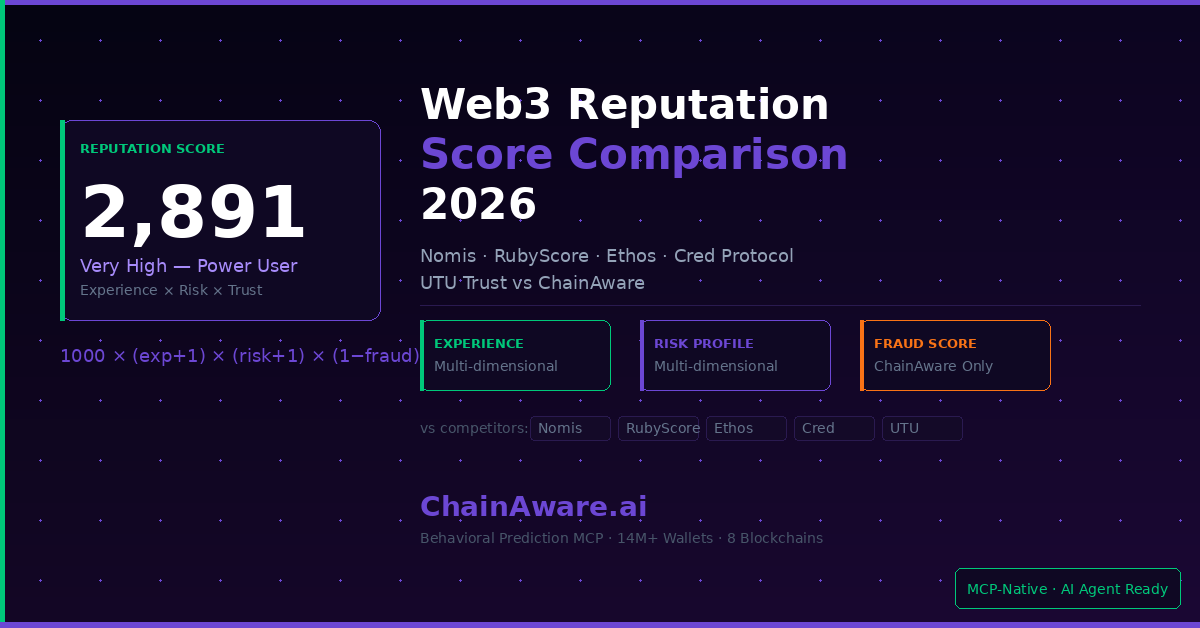
Evaluating Web3 identity infrastructure requires looking beyond marketing claims to the mechanics of data aggregation and scoring logic. Four providers dominate the current landscape: Nomis, RubyScore, Ethos Network, and ChainAware. Each uses different data sources and methodologies to calculate a wallet’s trustworthiness.
The following table compares these platforms on key dimensions, including their primary data inputs, score ranges, and typical use cases.
| Provider | Primary Data Sources | Score Range | Primary Use Case |
|---|---|---|---|
| Nomis | On-chain activity, ENS, social graphs | 0–100 | DeFi risk assessment, KYC-light onboarding |
| RubyScore | EVM transactions, NFT holdings, governance participation | 0–1000 | Airdrop eligibility, community segmentation |
| Ethos Network | Cross-chain activity, attestation-based verification | 0–1000 | Privacy-preserving identity, decentralized credentials |
| ChainAware | Multi-chain history, entity linking, risk signals | 0–100 | Institutional compliance, fraud detection |
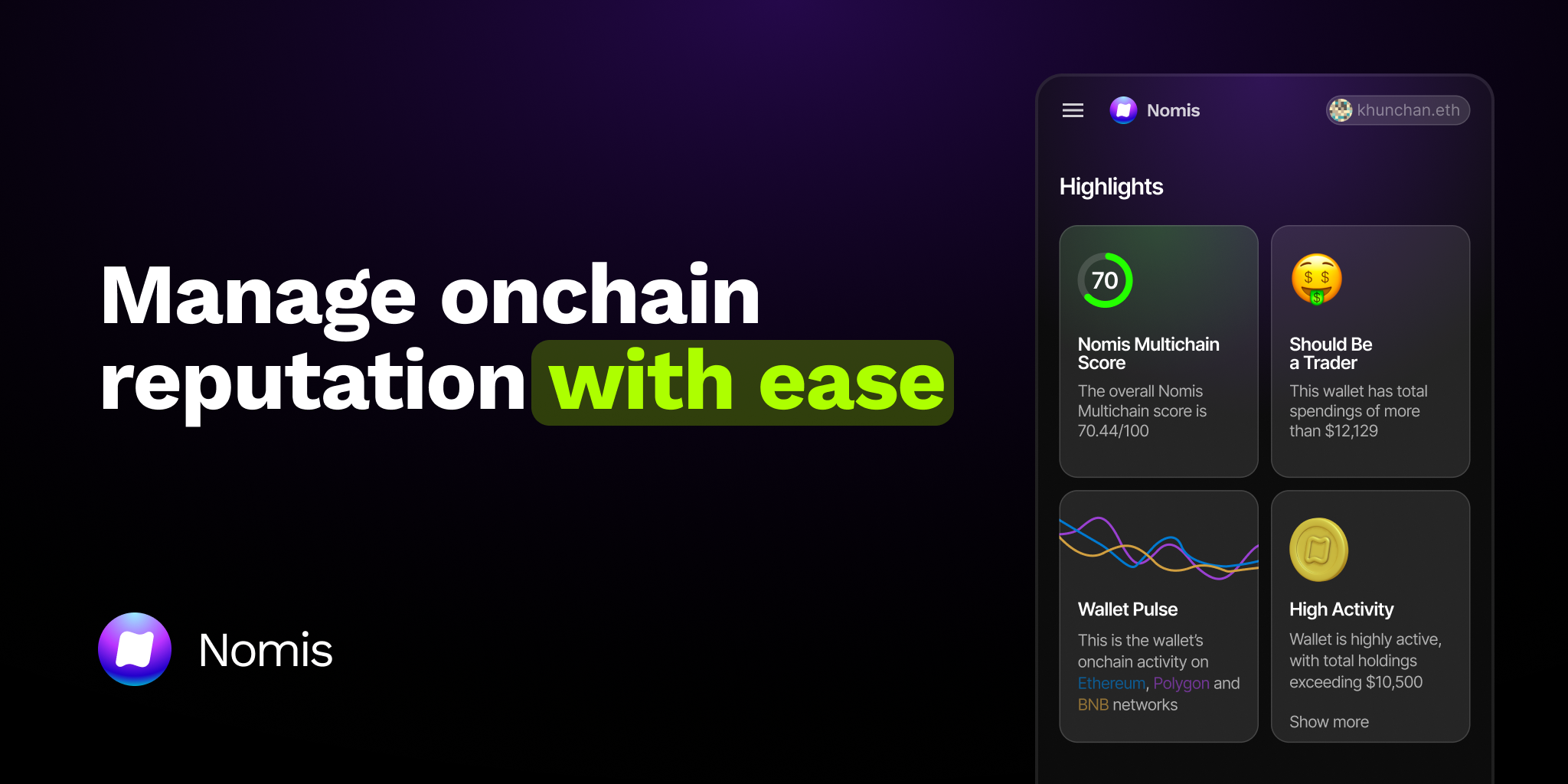
Nomis focuses heavily on on-chain behavior and social graph analysis, making it a strong choice for DeFi platforms needing to assess user risk without invasive KYC. Its score range is normalized to 0–100, which simplifies integration for teams already familiar with standard percentage-based metrics.
RubyScore leans into EVM-centric activity, rewarding users for governance participation and NFT holdings. It is frequently used by DAOs and protocol teams to segment communities for airdrops or exclusive access, offering a granular 0–1000 scale that allows for finer differentiation among active users.
Ethos Network distinguishes itself by prioritizing privacy and cross-chain attestation. Instead of relying solely on public transaction history, it uses verifiable credentials to build reputation, making it suitable for applications where user privacy is a primary concern. Its score also uses a 0–1000 scale.
ChainAware is built for institutional-grade compliance. It aggregates multi-chain history and links entities to detect fraud and money laundering patterns. Its 0–100 score is designed to integrate smoothly with traditional risk management frameworks used by regulated financial institutions.
Understanding the scoring scale and thresholds
Wallet Reputation Scores works best as a clear sequence: define the constraint, compare the realistic options, test the tradeoff, and choose the path with the fewest hidden costs. That order keeps the advice usable instead of decorative. After each step, pause long enough to check whether the recommendation still fits the reader's actual situation. If it depends on perfect timing, unusual access, or a best-case budget, include a simpler fallback.
The simplest way to use this section is to write down the real constraint first, compare each option against it, and choose the path that still works outside ideal conditions.
Choosing infrastructure for your compliance needs
Selecting the right wallet reputation scoring infrastructure requires aligning provider capabilities with your specific regulatory obligations. A platform that excels in consumer-facing identity verification may lack the transaction-monitoring depth required for financial compliance. You must treat the integration as a compliance audit before it is a technical implementation.
Determine whether your jurisdiction requires real-time transaction screening or static identity verification. If you operate in a high-risk sector, you need infrastructure that flags interactions with illicit addresses, not just positive reputation signals. This distinction dictates whether you need a risk-scoring provider or a pure identity credential issuer.
Reputation scores decay rapidly. Check if the provider updates its blockchain data in near real-time. A score based on historical data from months ago is useless for preventing current fraud. Ensure the API latency supports your transaction flow without introducing unacceptable delays for the user.
Even though wallet addresses are pseudonymous, linking them to off-chain identity data can trigger privacy laws. Verify how the provider handles data retention, deletion requests, and cross-border data transfers. Non-compliance here can result in significant regulatory fines that outweigh the benefits of the scoring system.
Before going live, run test transactions through the provider’s sandbox. Measure the false-positive rate to ensure legitimate users are not blocked. Adjust the risk thresholds to match your business model, balancing security with user experience.
A well-chosen infrastructure layer acts as a shield, filtering out bad actors while letting legitimate users pass through. By focusing on these four areas, you build a foundation that supports both security and regulatory adherence.
No comments yet. Be the first to share your thoughts!