What a wallet reputation score actually measures
A wallet reputation score is a numerical value—typically ranging from 0 to 100—that quantifies the trustworthiness and utility of a blockchain address. Unlike traditional credit scores, which rely on a narrow set of financial liabilities and payment history, wallet reputation scores are multidimensional. They synthesize on-chain behavior, security posture, and regulatory compliance to create a dynamic profile of how a wallet interacts with the decentralized web.
These scores are not static. They update in real-time as new transactions occur, reflecting the wallet's evolving relationship with smart contracts, decentralized exchanges, and other addresses. A high score does not necessarily mean the wallet is wealthy; it often signals consistent, low-risk engagement. Conversely, a low score may flag suspicious activity, such as interactions with known mixer services or frequent failed transaction attempts.
The data inputs behind these scores are rigorous. They evaluate transaction frequency, counterparty risk, and adherence to network norms. For instance, a wallet that consistently interacts with audited, high-liquidity pools may receive a higher reputation rating than one that frequently engages with new, unaudited contracts. This distinction is critical for institutions and users who need to assess risk without relying on subjective judgment.
Understanding these scores requires looking beyond the number itself. It involves recognizing the underlying metrics: how long the wallet has been active, the diversity of its interactions, and its history of responding to security protocols. This comprehensive view allows platforms to segment users more accurately, offering tailored experiences based on verified on-chain behavior rather than assumptions.
How wallet reputation scores are built
Reputation scores do not appear from nowhere. They are the output of a technical pipeline that ingests raw on-chain data, cleans it, and applies specific scoring models. For legal and regulatory analysis, understanding this pipeline is as important as the final number. A score is only as reliable as the data feeding it.
The foundation is transaction history. Every transfer, swap, and token interaction is recorded on the blockchain. However, raw hashes are meaningless to a human or a compliance officer. This is where label databases come in. Services like Etherscan or specialized providers tag addresses with labels such as "Exchange," "Rug Pull," or "Sanctioned Entity." When your wallet interacts with a labeled address, the reputation engine flags it. The more frequent and direct the interaction, the heavier the weight in the final calculation.
Beyond simple labels, modern scores analyze smart contract interactions. Did you approve unlimited tokens to a new DeFi protocol? Did you interact with a contract flagged for high-risk behavior? These interactions are aggregated into behavioral profiles. A wallet that only interacts with major, audited exchanges will have a different profile than one that frequently engages with unverified liquidity pools.
The aggregation process varies by provider. Some use simple rule-based systems (if X, then subtract Y points). Others use machine learning models trained on historical fraud patterns. Coinspect, for example, uses a checklist-based approach where critical security failures have a disproportionate impact on the final 0-100 score. Others, like Nomis or RubyScore, may use more complex probabilistic models to estimate the likelihood of malicious activity.
| Provider | Scoring Method | Score Range |
|---|---|---|
| Coinspect | Security Checklists | 0-100 |
| Nomis | Probabilistic ML | 0-1 |
| RubyScore | Behavioral Intelligence | 0-100 |
Understanding these inputs helps you interpret the scores. A low score doesn't always mean the wallet is "bad." It might just mean it's new, or it interacts with high-risk but legitimate protocols. For regulatory purposes, the key is consistency. A score that accurately reflects the risk profile of the wallet is far more useful than one that tries to be universally "good."
Comparing Leading Reputation Protocols
The wallet reputation market has fragmented into specialized providers, each optimizing for different risk profiles. While the goal—quantifying trust—is universal, the methodologies diverge sharply. Some providers prioritize static security hygiene, while others focus on dynamic behavioral intelligence. Understanding these distinctions is essential for selecting the right infrastructure for high-stakes compliance or user segmentation.
The following comparison outlines the core differences between four leading providers: Formo, Coinspect, Veritas Protocol, and Nomis. This analysis focuses on their primary scoring focus, data sources, and score ranges as defined by their official documentation.
| Provider | Primary Focus | Score Range | Key Data Sources |
|---|---|---|---|
| Formo | Engagement & Value | 0-100 | On-chain activity, transaction volume, token holdings |
| Coinspect | Security Hygiene | 0-100 | Security checklists, smart contract risks, phishing exposure |
| Veritas Protocol | Trust & Compliance | 0-100 | Entity risk, sanctions screening, transaction history |
| Nomis | Behavioral Intelligence | 0-100 | 10+ on-chain parameters, wallet clustering, activity patterns |
Methodological Divergence
Formo positions its Wallet Score as a data-driven standard for segmenting users based on engagement and value. It aggregates transaction volume, token holdings, and activity frequency to determine a wallet's economic significance. This approach is particularly useful for platforms seeking to identify high-value users for rewards or tiered access.
Coinspect takes a defensive stance, focusing exclusively on security. Its Security Score is derived from static checklists that evaluate smart contract risks, phishing exposure, and known malicious interactions. A high Coinspect score indicates a wallet that is technically sound and less likely to be compromised or involved in illicit activity due to poor hygiene.
Veritas Protocol emphasizes regulatory compliance and entity risk. Its Trust Score incorporates sanctions screening and entity risk data, making it a strong candidate for KYC/AML workflows. Veritas aims to provide a clear signal of whether a wallet is associated with sanctioned entities or high-risk jurisdictions.
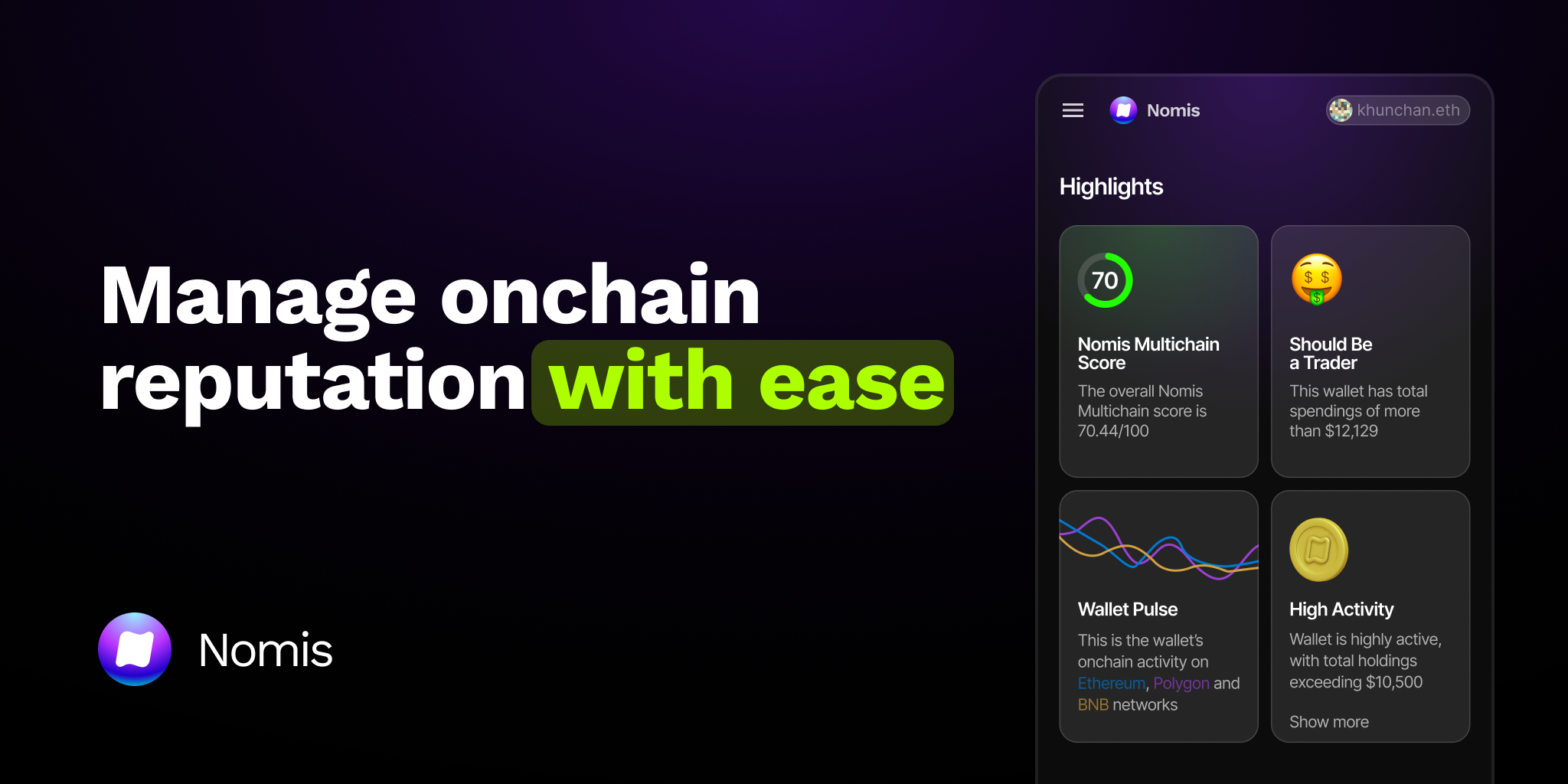
Nomis offers a behavioral intelligence approach, synthesizing over ten on-chain parameters to create a Wallet Rank. By analyzing patterns such as transaction frequency, counterparty diversity, and wallet clustering, Nomis provides a holistic view of wallet behavior, distinguishing between active traders, long-term holders, and potential sybil accounts.
Choosing the Right Infrastructure
The choice between these providers depends on your primary risk vector. If your concern is user retention and value identification, Formo's engagement metrics offer the most direct signal. For security-first applications, Coinspect's checklist-based approach provides clear, actionable security insights. If regulatory compliance is the primary driver, Veritas's sanctions and entity risk data are indispensable. For complex fraud detection and sybil resistance, Nomis's behavioral analysis offers the deepest granularity.
Many sophisticated platforms integrate multiple providers to create a composite reputation score, balancing security, compliance, and engagement signals. This multi-layered approach mitigates the blind spots inherent in any single methodology.
Real-World Applications and Compliance
Wallet reputation scores have moved from theoretical models to essential infrastructure for high-stakes crypto operations. In DeFi lending protocols, these scores act as a gatekeeper, determining borrowing limits and interest rates based on a wallet’s history with sanctioned addresses or mixers. This dynamic risk assessment allows platforms to mitigate exposure without requiring traditional credit checks, creating a permissionless but accountable lending environment.
For institutional custody providers, reputation data is critical for regulatory compliance. Custodians use these scores to screen incoming assets against anti-money laundering (AML) databases. By integrating real-time reputation checks, they can flag transactions linked to illicit activities before settlement, ensuring adherence to strict legal frameworks. This proactive screening reduces liability and protects the integrity of the custody layer.
Regulatory bodies are increasingly looking at on-chain reputation as a proxy for compliance. While not a replacement for KYC, wallet scores provide a transparent audit trail that can satisfy certain regulatory requirements for transaction monitoring. This shift is particularly evident in jurisdictions with strict AML laws, where institutions must demonstrate robust due diligence processes.
| Use Case | Primary Benefit | Key Data Source |
|---|---|---|
| DeFi Lending | Dynamic interest rates | Transaction history |
| Institutional Custody | AML compliance | Sanctions lists |
| Regulatory Reporting | Audit trail transparency | On-chain activity |
Improving your wallet reputation
Your on-chain identity is a cumulative record of behavior. Building a strong reputation score requires deliberate, consistent actions that signal legitimacy to protocol risk engines. The following steps outline the most effective methods for cleaning up your history and establishing trust.
Many wallets accumulate hundreds of unused token approvals from past interactions. These lingering permissions pose security risks and can negatively impact your trust score. Use a tool like Revoke.cash to review and revoke permissions for tokens you no longer use. This reduces your attack surface and demonstrates responsible asset management.
Interacting with contracts flagged for scams, hacks, or regulatory violations can permanently stain your wallet's reputation. Risk scores often aggregate data from multiple sources, including chainalysis and official regulatory lists. Before interacting with a new protocol, verify its audit status and community standing. Avoid mixing funds with known bad actors to prevent guilt-by-association penalties.
Dormant wallets or those with erratic transaction patterns are often viewed with suspicion. Regular, moderate activity across diverse, legitimate protocols helps establish a stable identity. This includes using reputable decentralized exchanges, lending platforms, and layer-2 networks. Consistency signals that you are an active, long-term participant rather than a transient actor.
Some reputation protocols allow you to link verified real-world identities or ENS names to your wallet. This adds a layer of trust that purely on-chain data cannot provide. If the protocol supports it, complete any available identity verification steps. This helps distinguish your wallet from sybil accounts and automated bots.
Wallets that only interact with high-yield or obscure protocols may be flagged as risky. Diversifying your usage across established, blue-chip protocols and mainstream assets demonstrates stability. This includes holding a variety of tokens and using multiple reputable services. A balanced portfolio is a strong indicator of a legitimate user.
Improving your wallet reputation is a long-term strategy. There are no quick fixes, but consistent adherence to these practices will gradually improve your score and open access to more sophisticated financial products.
No comments yet. Be the first to share your thoughts!